Marine Energy Collegiate Competition — Senior Project
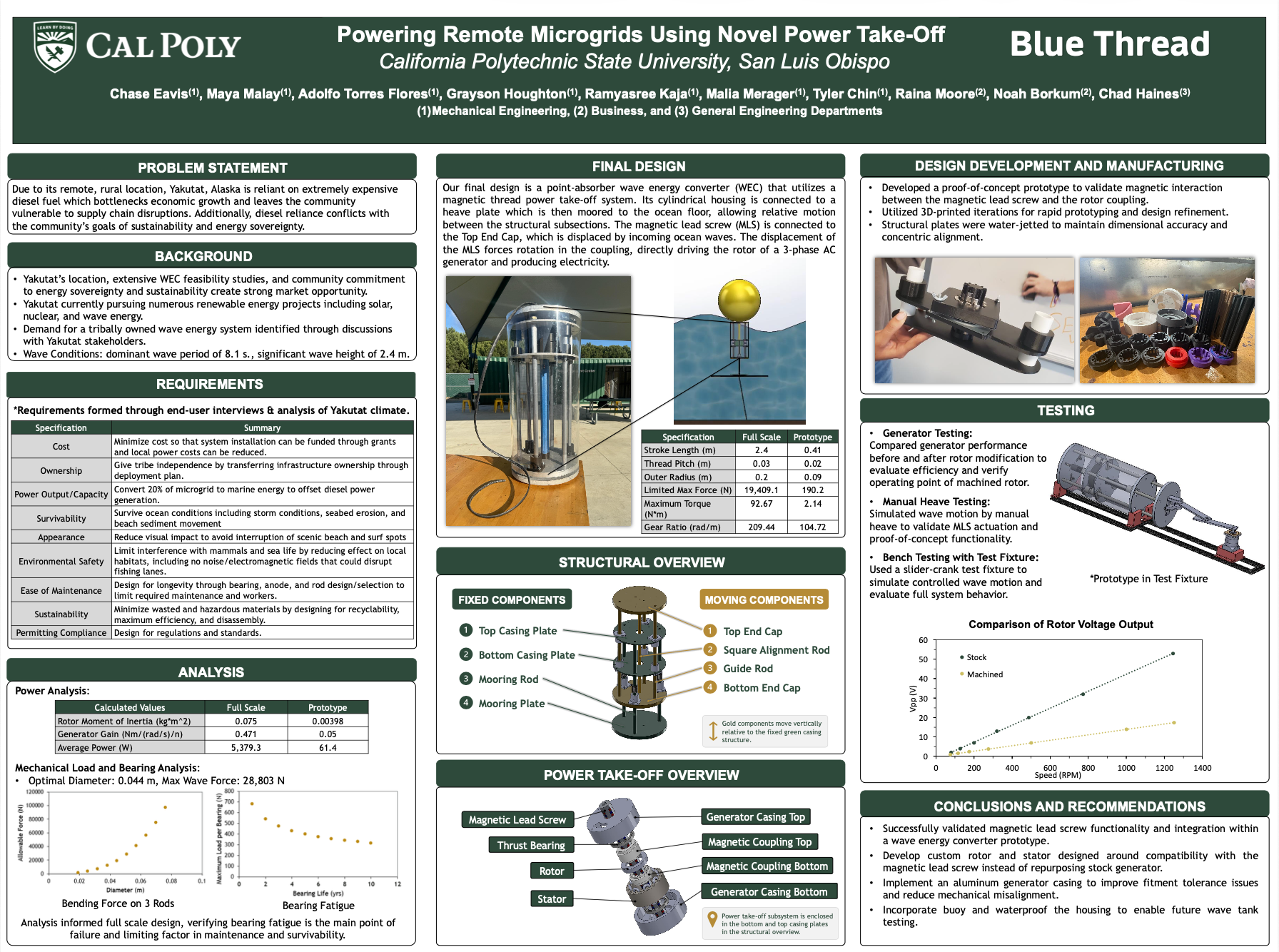
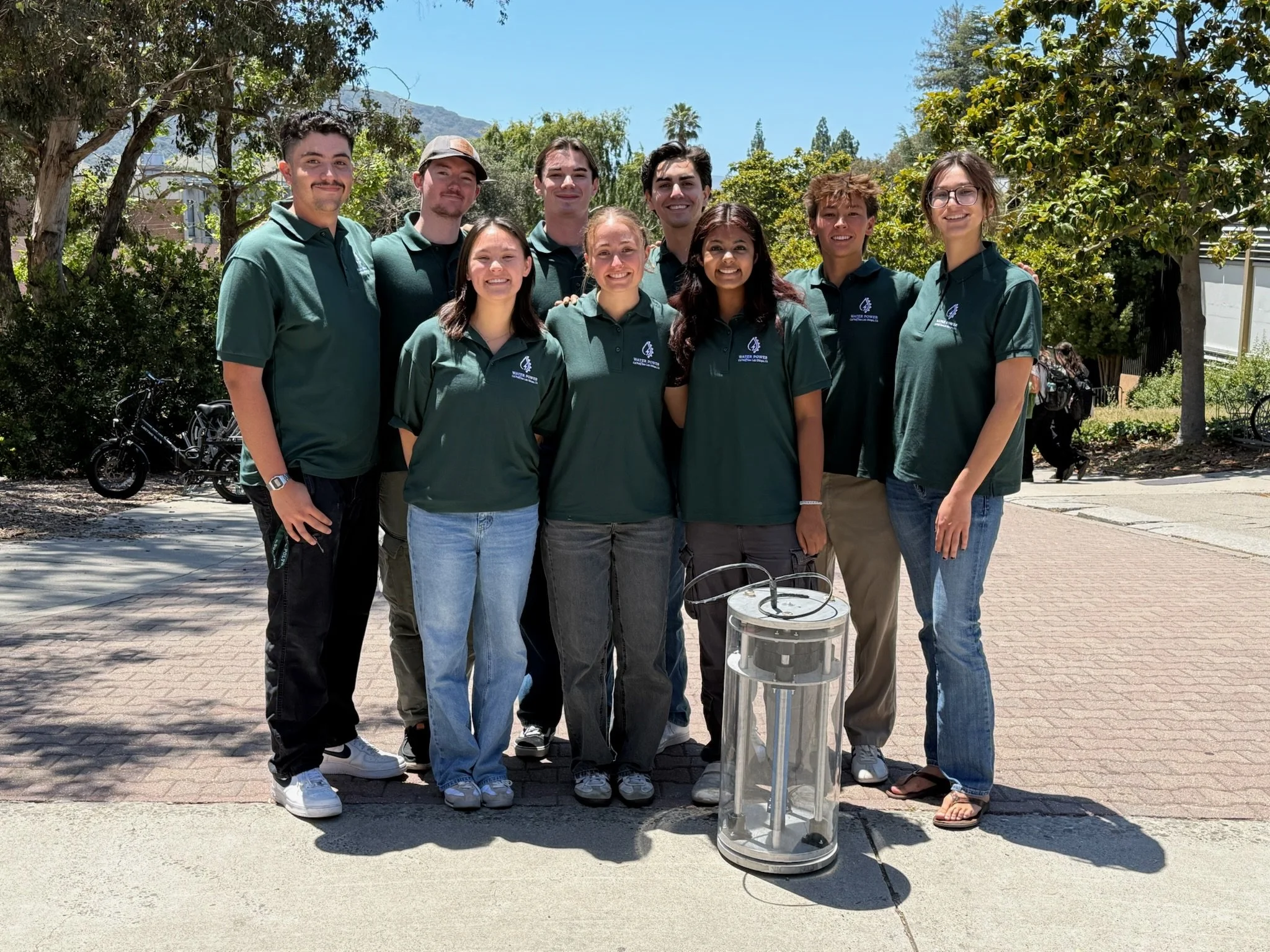
A year long senior project entered in the U.S. Department of Energy's Marine Energy Collegiate Competition, where my team designed a wave energy converter to generate clean power from ocean motion. The project spanned mechanical, electrical, and systems engineering across a team of 10, eight mechanical engineering majors and two business majors, and placed 3rd overall nationally.
The goal was to offset diesel dependence for Yakutat, a remote tribal village in Alaska that currently relies on expensive, supply chain vulnerable diesel fuel. Operating under the team name Blue Thread, we designed a system intended for deployment in Yakutat Bay roughly 500 m offshore, with underwater power cables feeding the Yakutat microgrid. The design targeted offsetting 20% of the microgrid's load with marine energy, while meeting requirements for survivability in storm conditions, low environmental impact, ease of maintenance, and tribal ownership of the infrastructure.
Wave Energy Converter
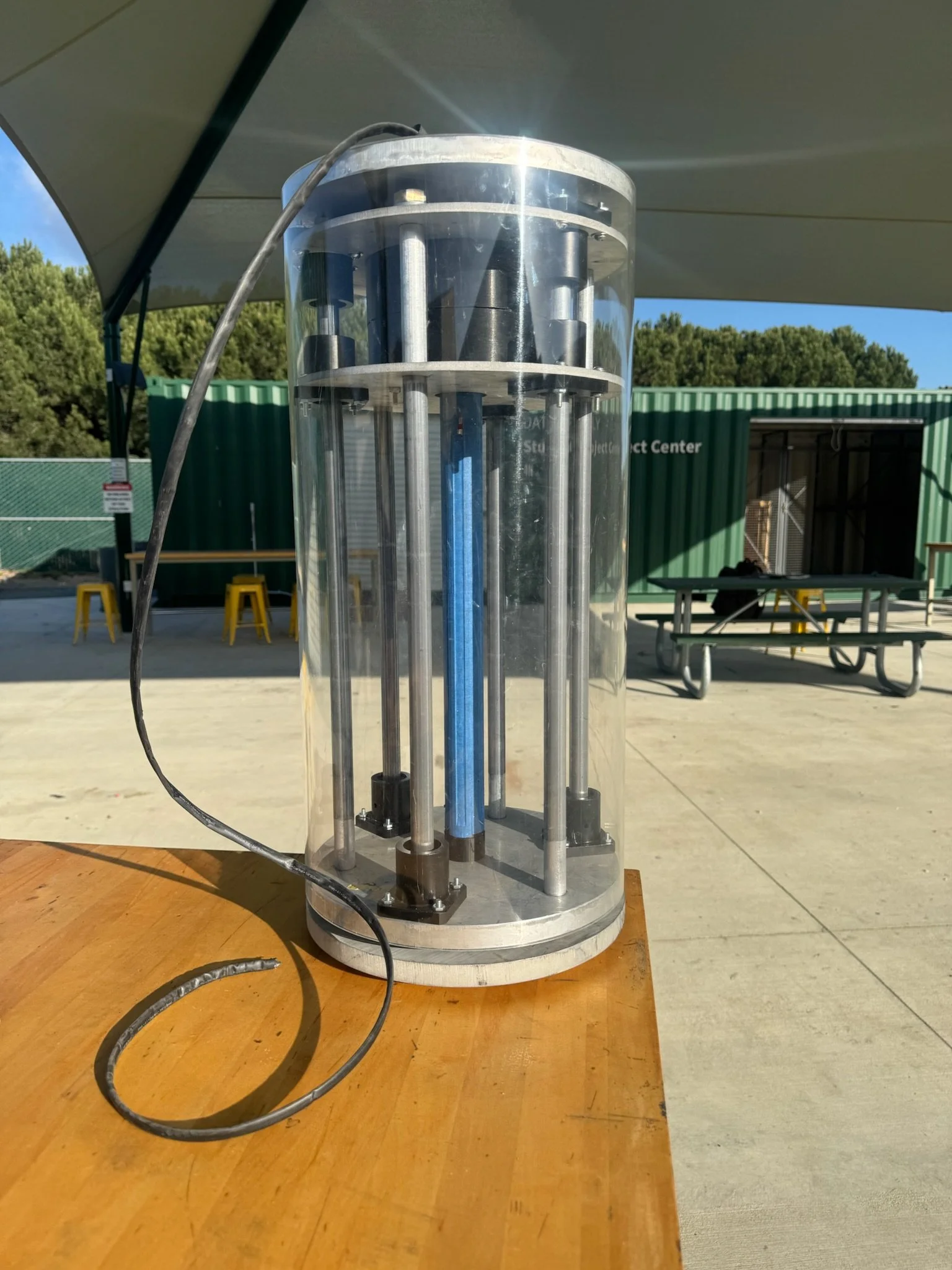
The full device is a point absorber wave energy converter that uses a novel magnetic thread power takeoff system. Its cylindrical housing is connected to a heave plate moored to the ocean floor, allowing relative motion between the structural subsections as waves pass. Incoming waves displace the top end cap, which drives the internal power takeoff and generates electricity. At full scale, the system was designed to produce roughly 5.4 kW of average power, sized around Yakutat's dominant wave period of 8.1 s and significant wave height of 2.4 m.
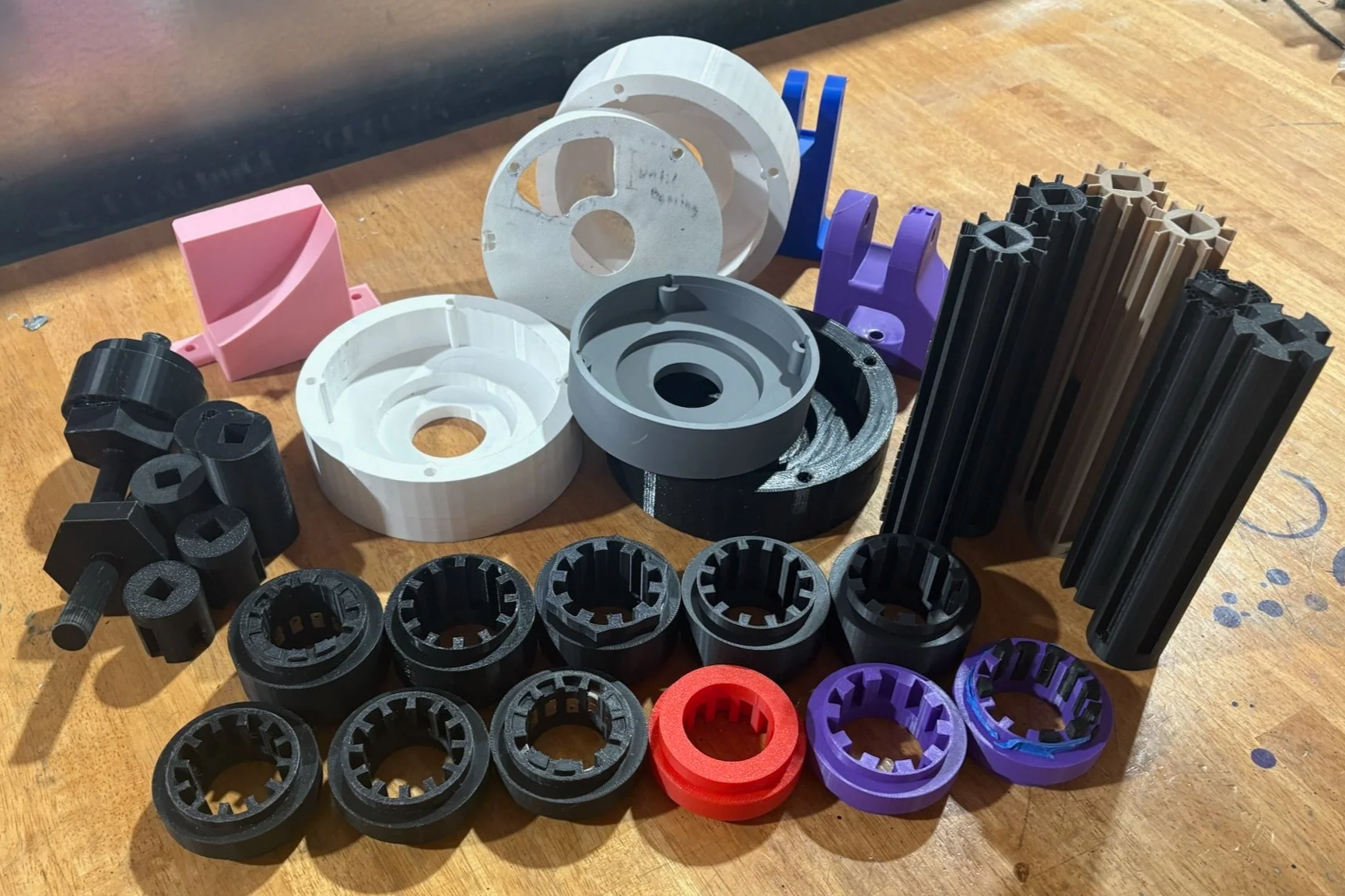
Mechanical load and bearing analysis informed the full scale design, identifying bearing fatigue as the main point of failure and the limiting factor for maintenance and survivability. Structural plates were waterjet cut to maintain dimensional accuracy and concentric alignment, and 3D printed iterations were used throughout for rapid prototyping and design refinement.
Power Takeoff System
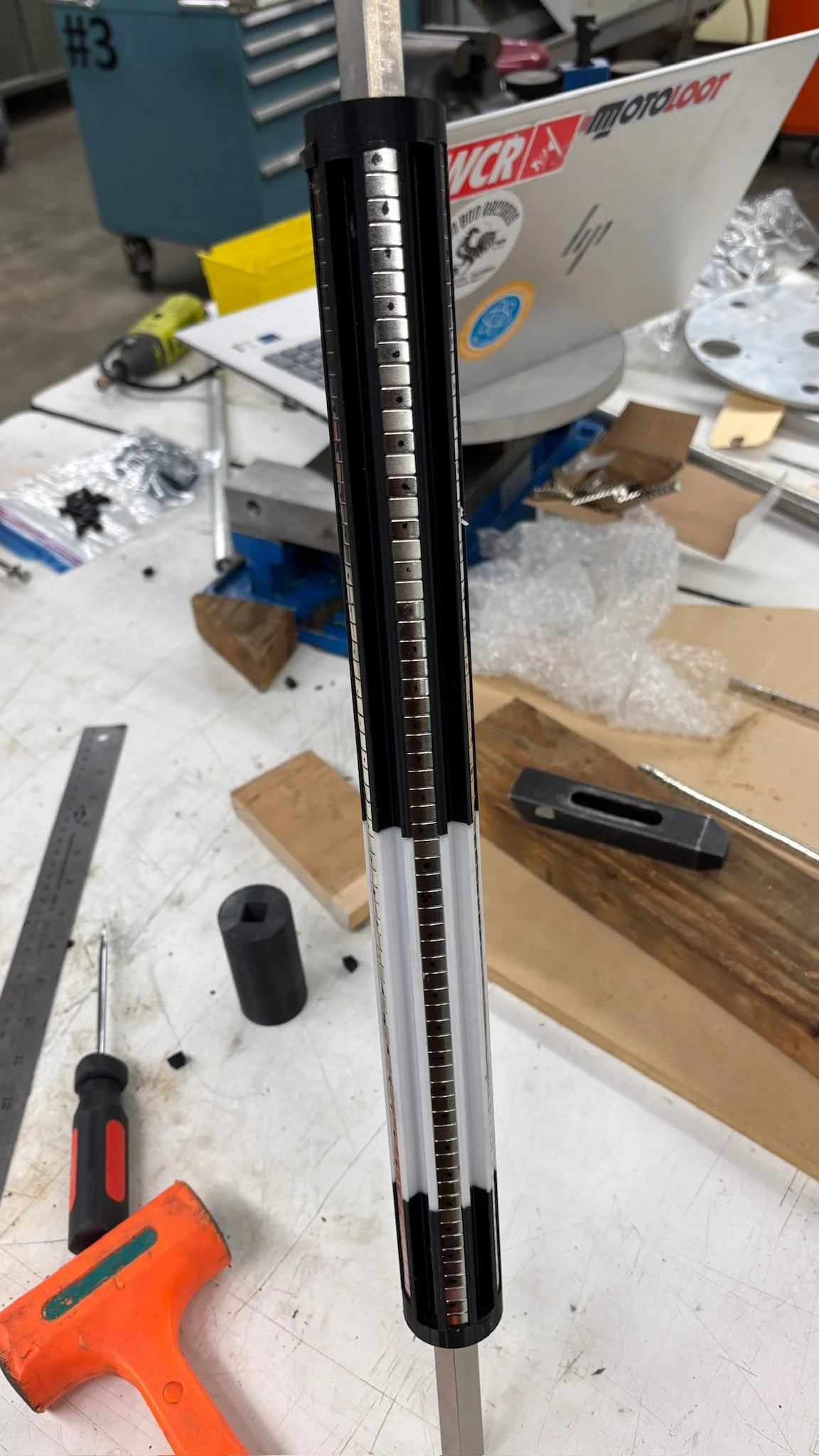
The power takeoff was my primary focus: the subsystem that converts the device's linear wave motion into electrical output. It centers on a magnetic lead screw (MLS) that drives a 3 phase AC generator. The MLS functions like a mechanical lead screw, but instead of physical threads it uses interacting magnetic threads to transmit force without contact, eliminating mechanical wear between the moving parts. As waves displace the MLS, a magnetic coupling acting as the "nut" on the screw is forced to rotate, directly driving the rotor of the generator.
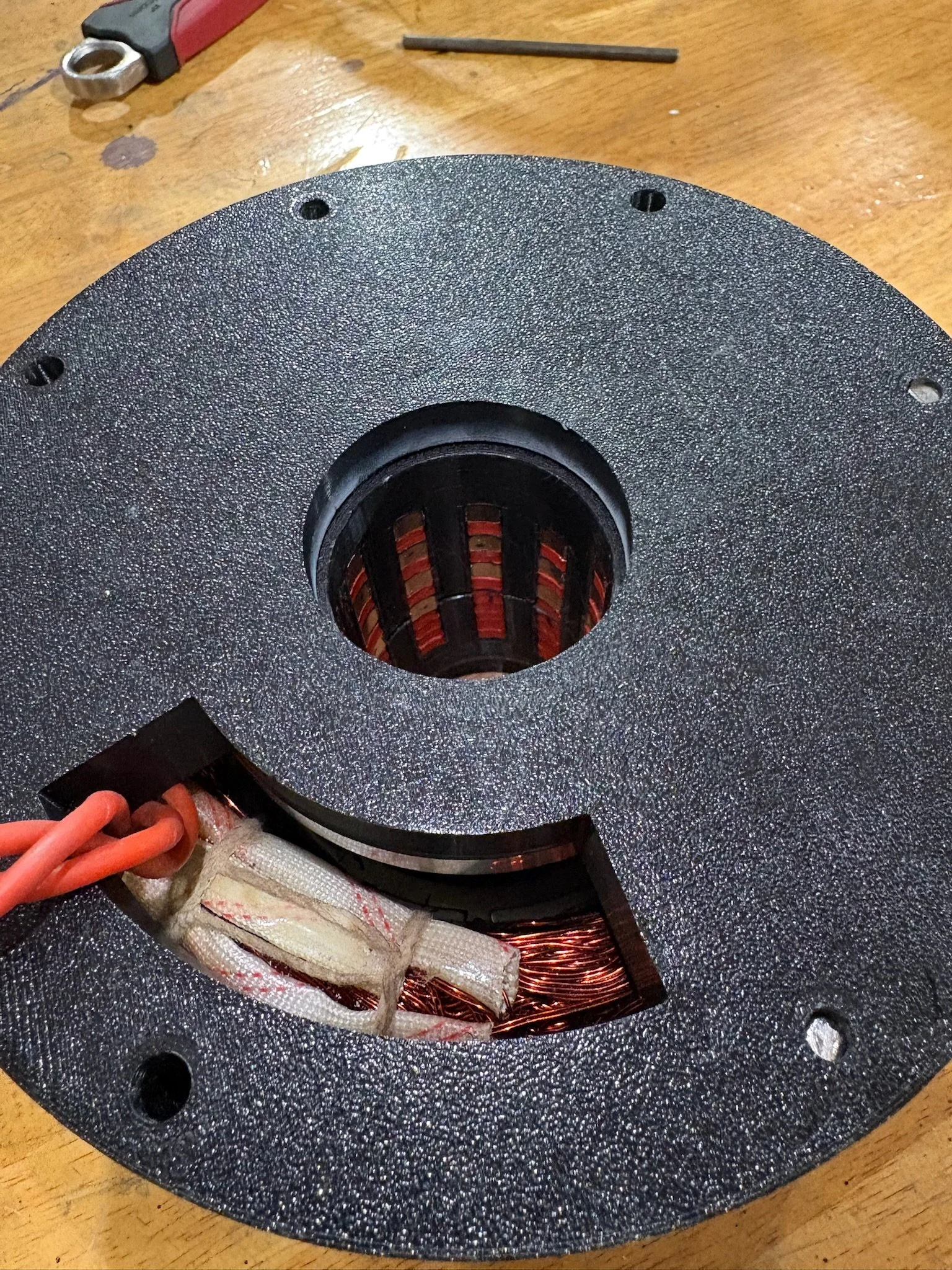
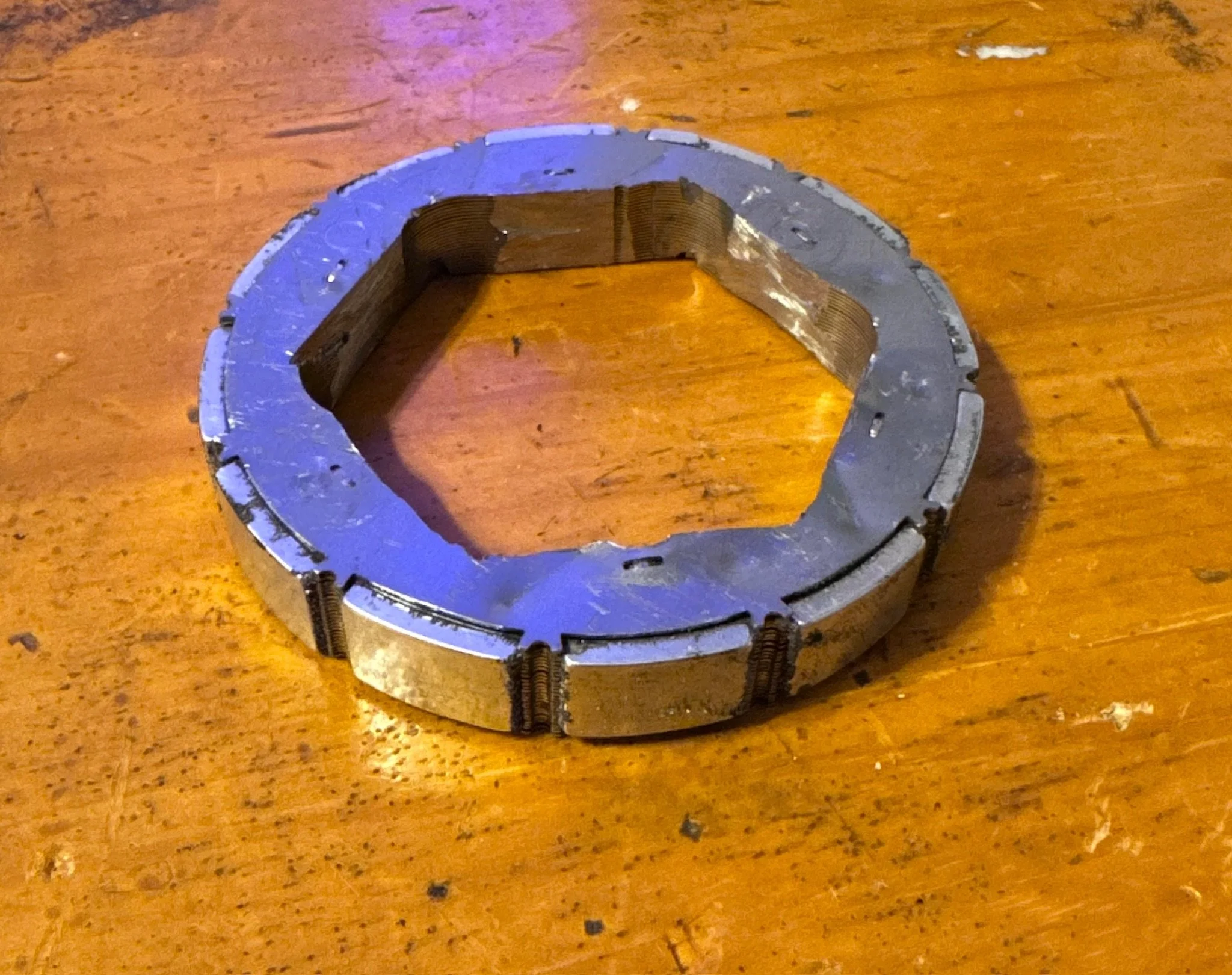
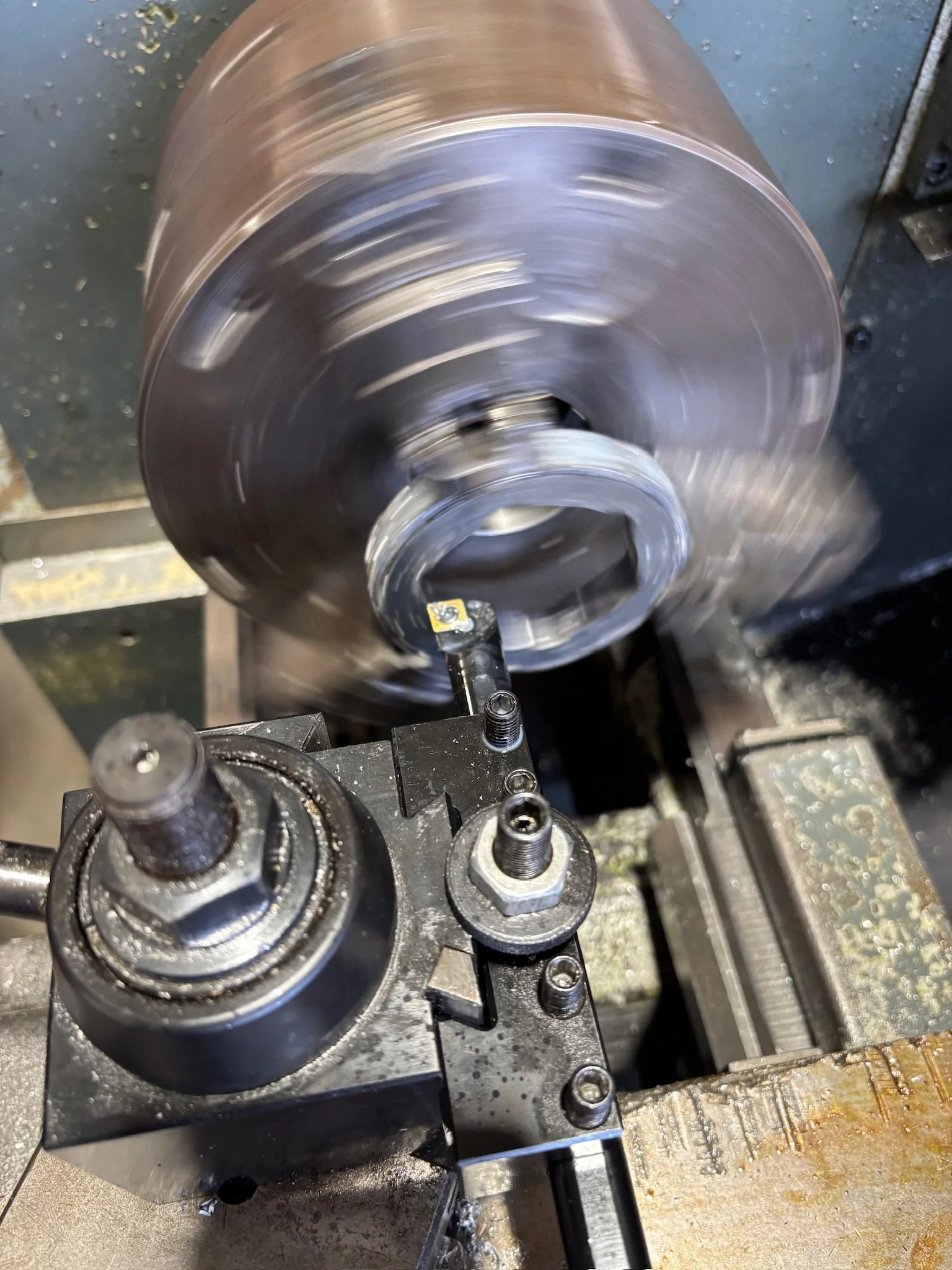
A major part of the work was moving away from a repurposed stock generator toward a custom rotor and stator designed specifically around the magnetic lead screw. I helped develop and test a proof of concept prototype validating the magnetic interaction between the lead screw and the rotor coupling, and compared generator performance before and after rotor modification to verify the machined rotor's operating point. Testing included manual heave testing to validate MLS actuation and a slider crank test fixture to simulate controlled wave motion and evaluate full system behavior.
Manufacturing & Prototyping
The prototype was built using a mix of processes chosen for accuracy and iteration speed. Structural plates were waterjet cut to hold tight dimensional tolerances and maintain concentric alignment across the assembly, which was critical for the magnetic lead screw and coupling to operate without binding. 3D printing was used heavily throughout development for rapid iteration, allowing quick design refinement of components before committing to final parts. I helped manufacture nearly every component on the device.
While the manufacturing itself was generally quick, the most time intensive part was fine tuning the magnets in the magnetic lead screw and coupling. We went through many iterations to dial in the orientation, spacing, and number of magnet rows in each piece, all to achieve the smoothest possible magnetic interface between the coupling and the MLS. One key recommendation coming out of the build was moving to an aluminum generator casing to improve fitment tolerances and reduce mechanical misalignment, a direct lesson from assembling and testing the prototype.
Testing & Validation
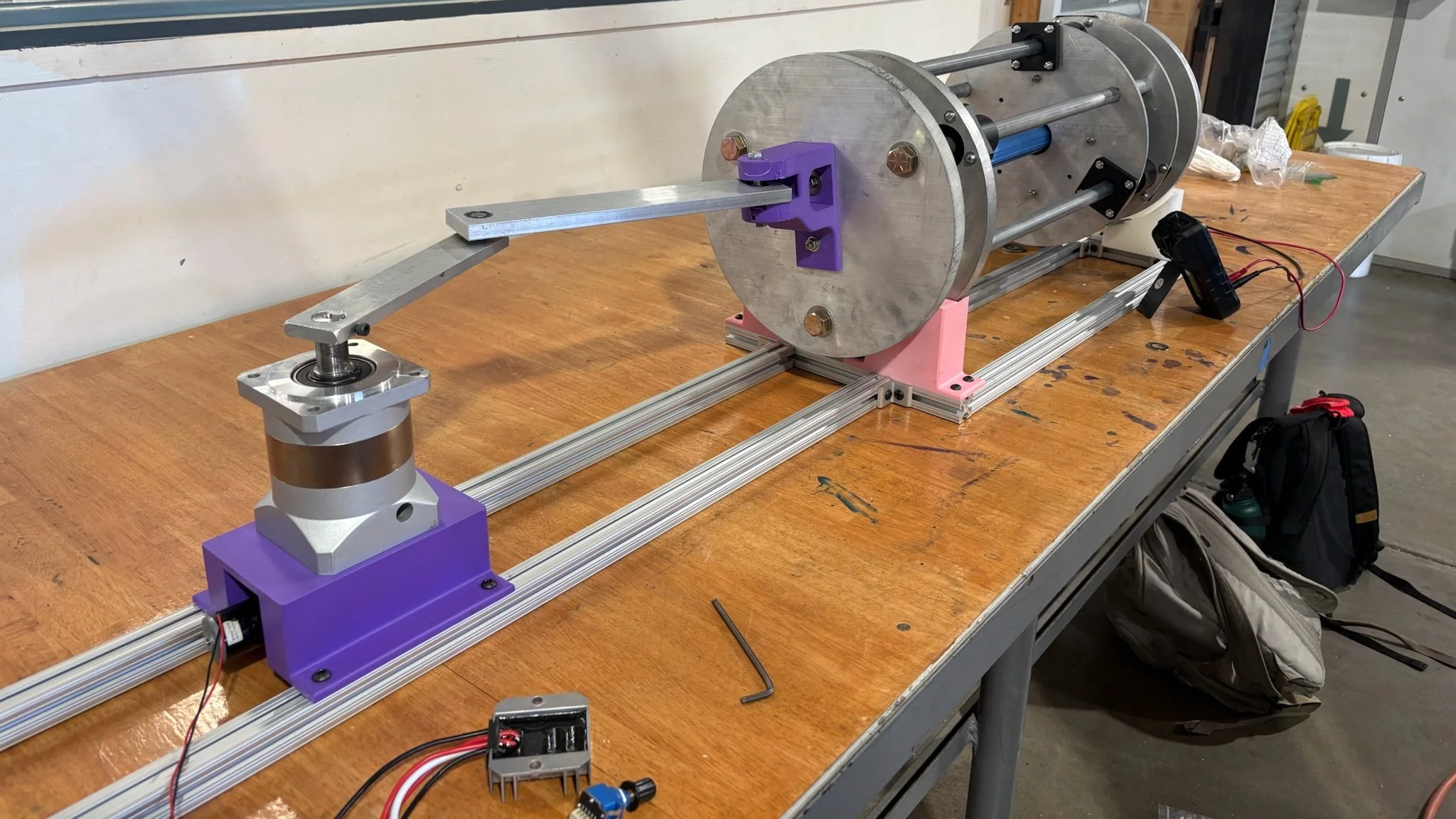
The prototype was validated through three complementary tests, each targeting a different aspect of system behavior:
Generator testing compared generator performance before and after rotor modification, evaluating efficiency and verifying the operating point of the machined rotor against the stock baseline.
Manual heave testing simulated wave motion by hand to validate magnetic lead screw actuation and confirm proof of concept functionality.
Bench testing with a slider crank fixture simulated controlled, repeatable wave motion to evaluate full system behavior under realistic input.
Together these tests successfully validated the magnetic lead screw's functionality and its integration within the wave energy converter prototype.