Baja SAE
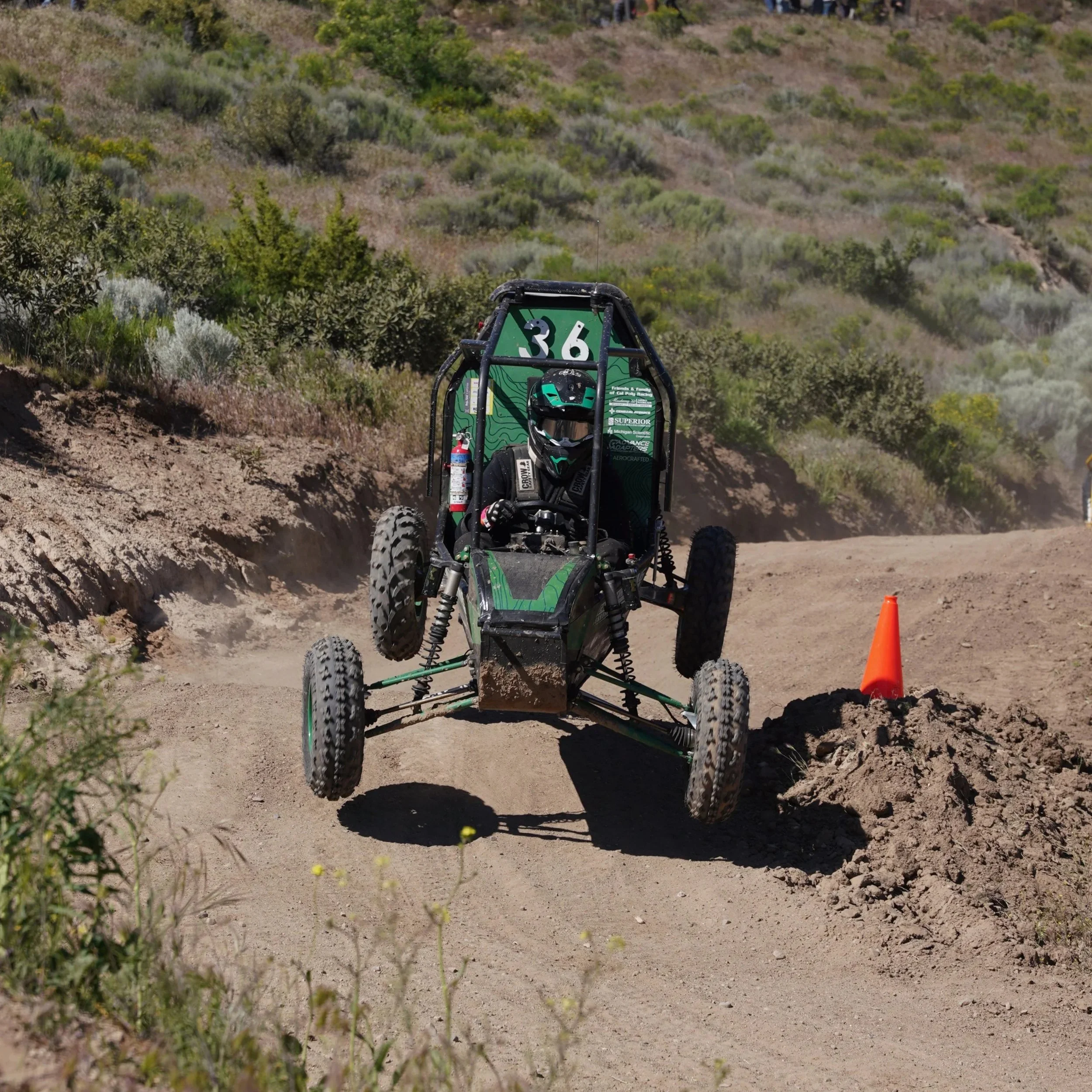
Baja SAE is a collegiate engineering competition run by SAE International where student teams design, build, and race a single seat, off road vehicle. Every team uses the same engine, so success comes down to how well you engineer everything else. Teams compete in dynamic events and a four hour endurance race over rough terrain, so every component has to survive heavy vibration, impact, and dust.
I've competed in Baja SAE with Cal Poly Racing for the past four years, progressing through three roles of increasing responsibility. I started as Electromechanical Lead, designing and manufacturing enclosures, then moved to Electronics Overall Lead, designing the vehicle's PCBs, and ultimately became Electrical Tech Director, overseeing full vehicle analysis and managing the entire electrical integration.
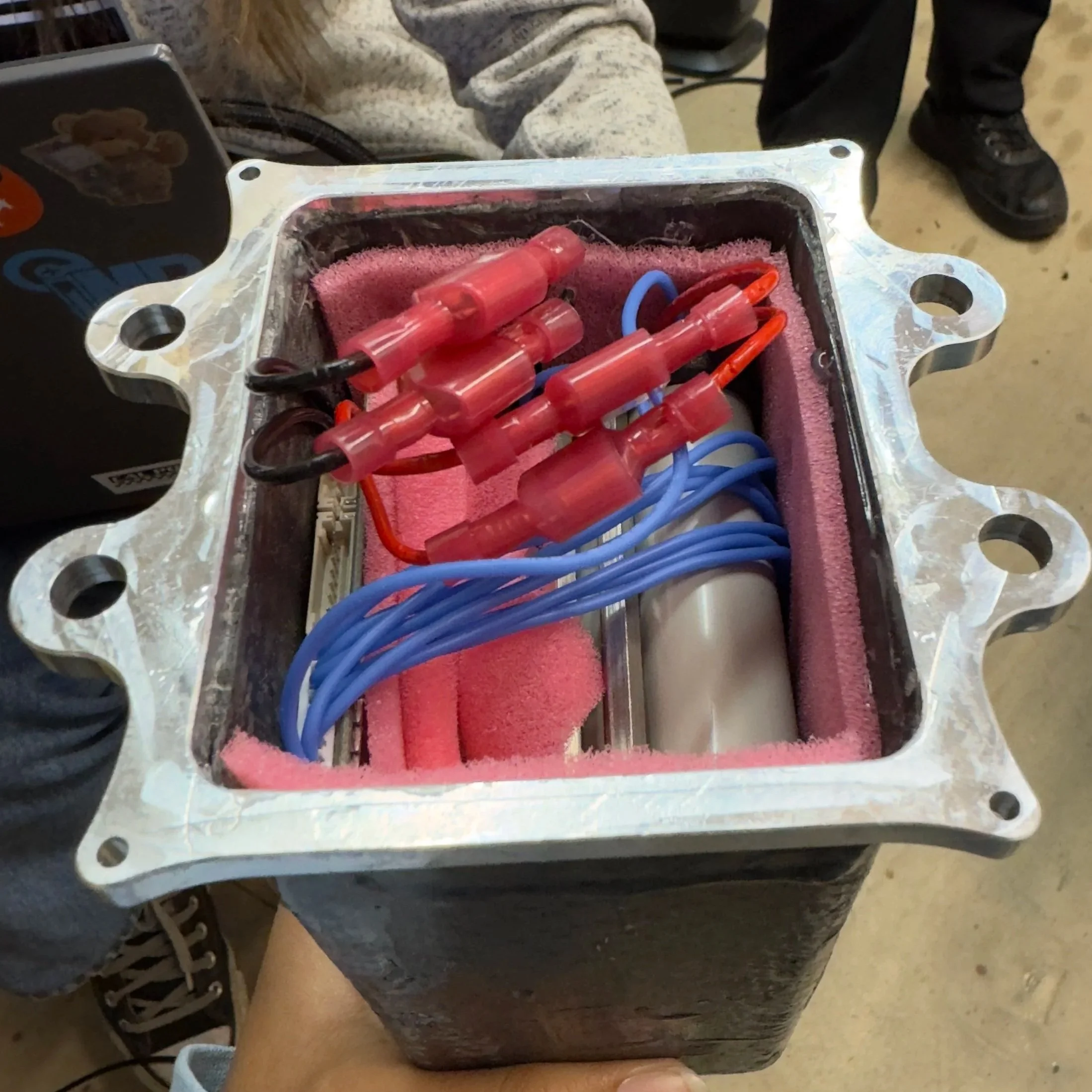
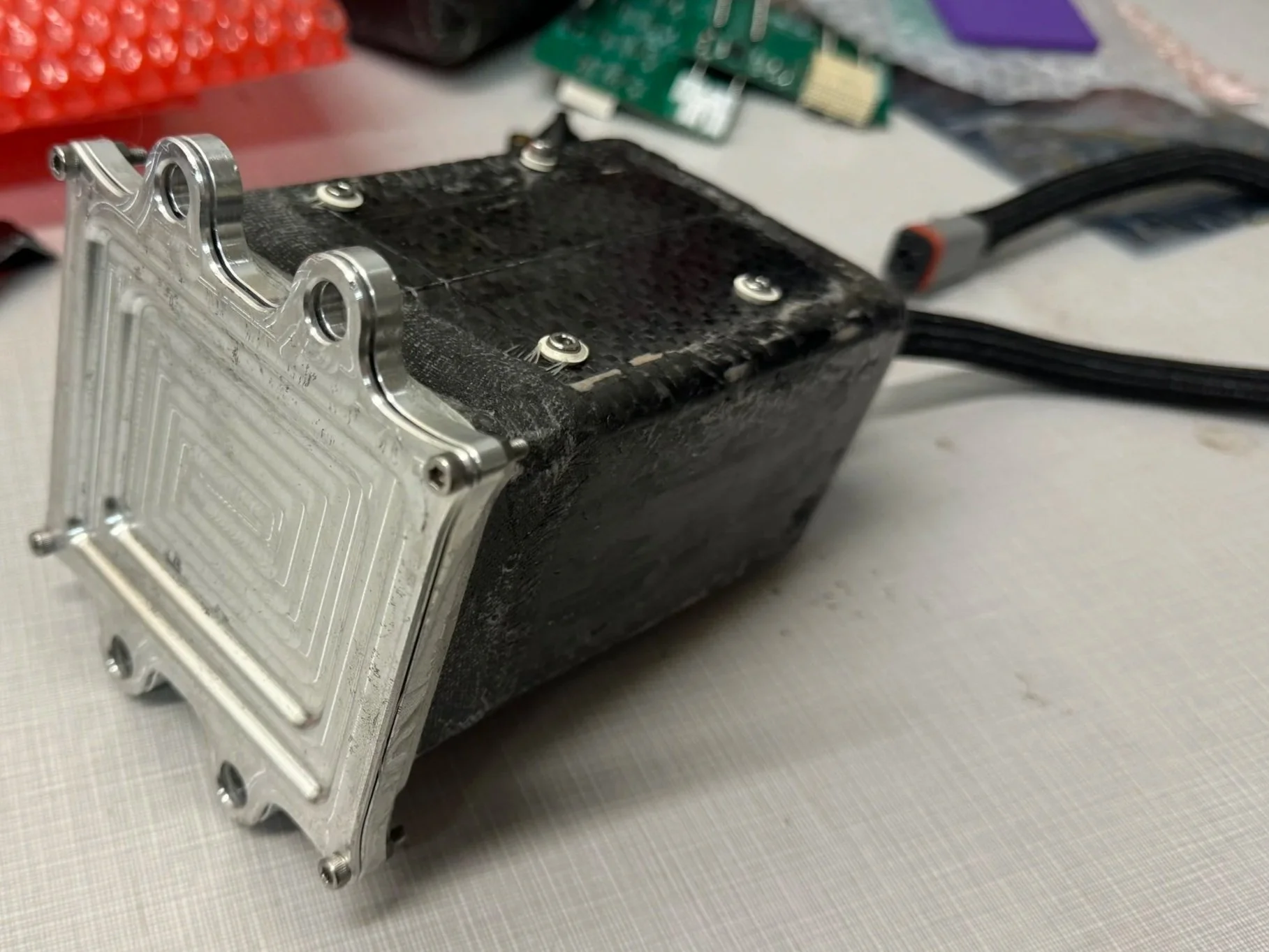
A custom 8S1P lithium-ion battery pack (28.8 V nominal, 4.2 V max per cell) and protective enclosure designed to power all onboard vehicle systems. The design covered cell selection, interconnect design, packaging, and spot-welded assembly, with the pack delivering roughly two hours of runtime and engineered for quick swaps so it could be changed out once or twice during the four-hour endurance race. Key requirements included an IP67-rated enclosure for full dust and water protection, resistance to off-road vibration and impact, effective heat management, and a compact, lightweight package to fit within tight space and weight constraints.
Battery / Battery Enclosure
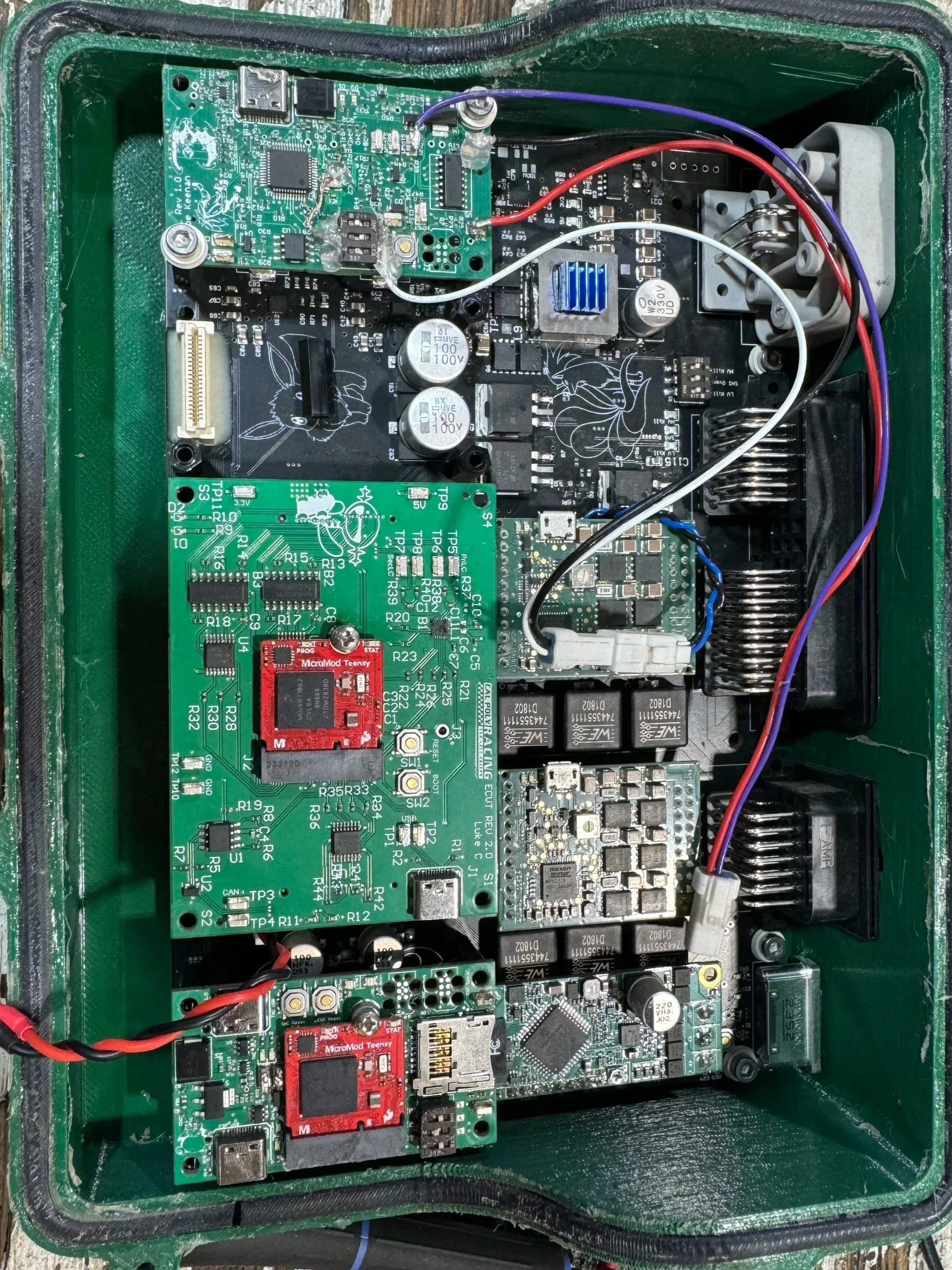
Main Electronics Enclosure
The central housing for the vehicle's core electronics and data acquisition hardware. Engineered to keep sensitive boards and wiring protected from dust, moisture, vibration, and impact loads during competition, while prioritizing serviceability so components could be quickly accessed and repaired when needed. A clear window allows the internal error LEDs to be checked at a glance without opening the enclosure. Also the enclosure was 3D printed to enable fast prototyping and iteration.
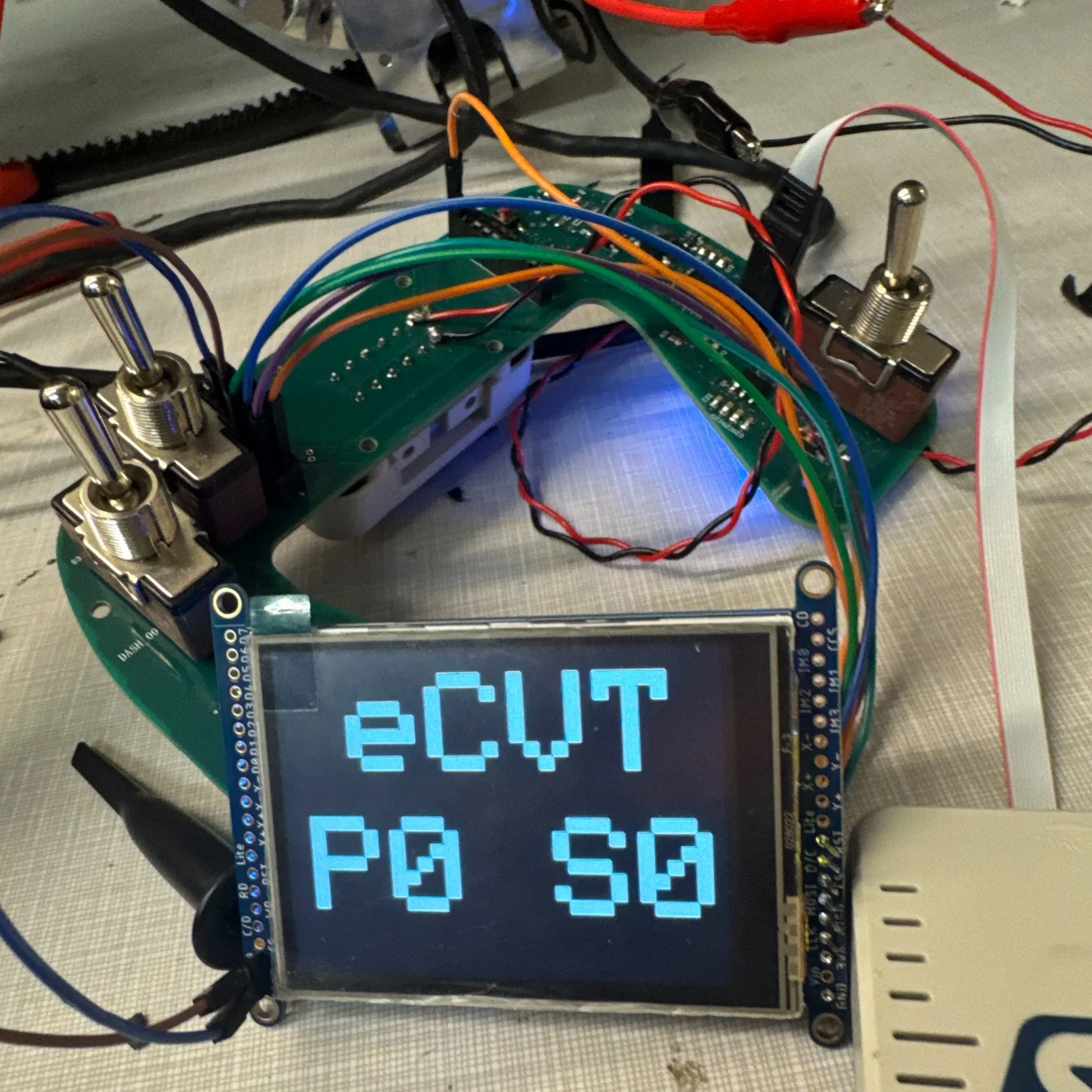
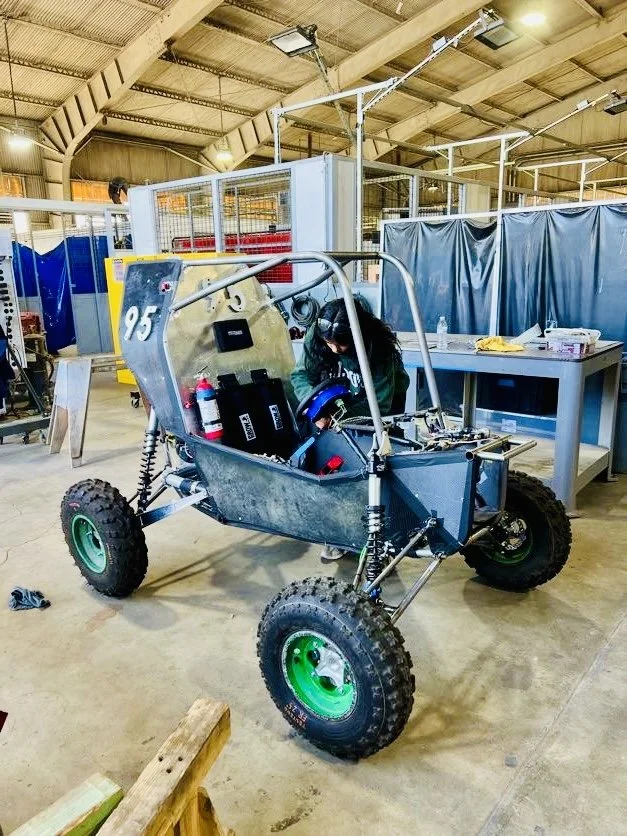
The driver's dashboard, housing the display, controls, and its dedicated PCB. The dashboard was initially built around the steering wheel, then upgraded to fit entirely inside it, a significant packaging challenge that drove heavy iteration on the PCB to fit within the wheel while connecting to the buttons and switches consistently and reliably. The display was upgraded from a two digit, seven segment readout to an LED display, and the board integrated kill switches for the low voltage and high voltage systems along with buttons for various I/O. Designed for clear driver visibility and access to controls while protecting the hardware inside, balancing ergonomics with the same durability requirements as the rest of the vehicle.
Dashboard Enclosure & PCB
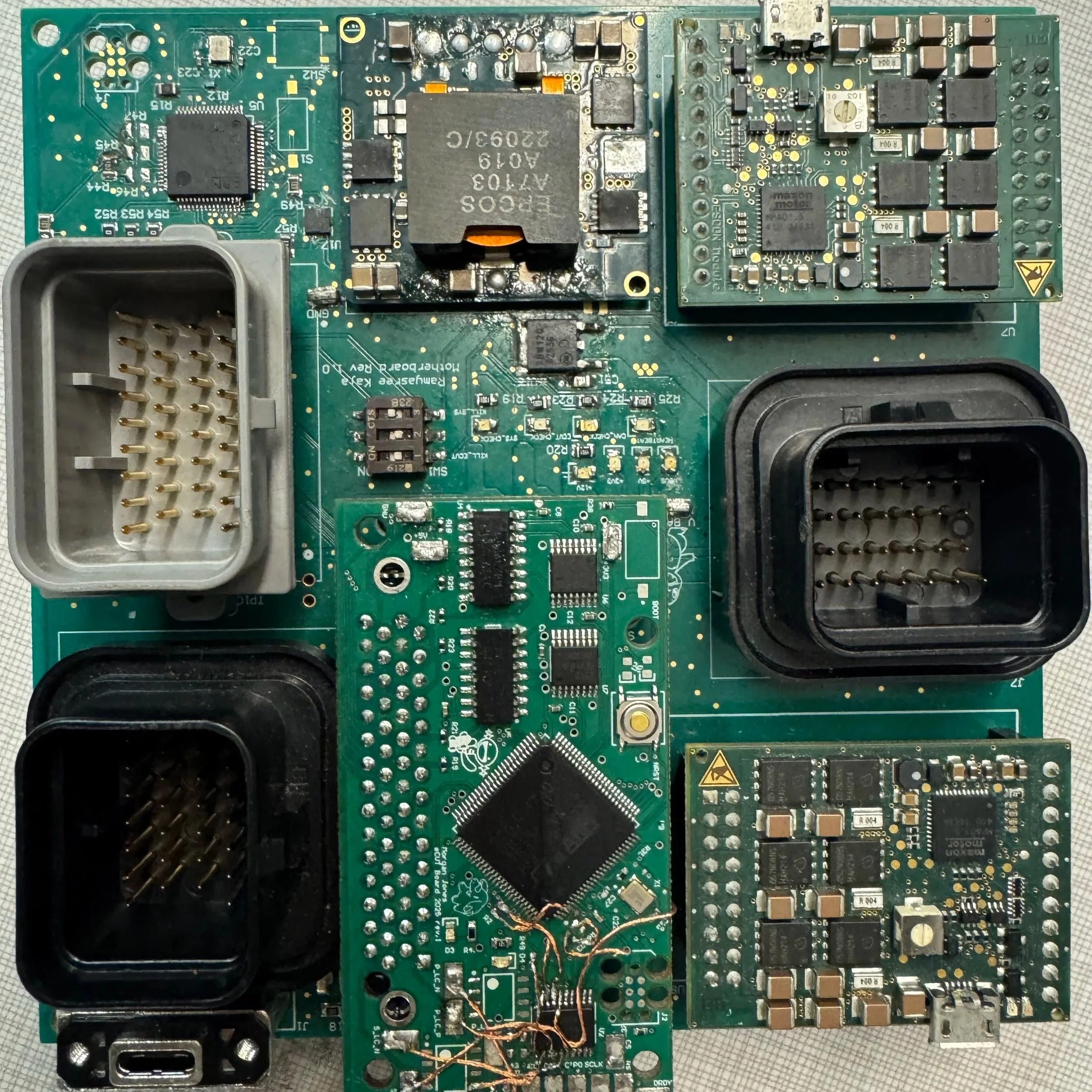
Motherboard PCB
The primary circuit board for the vehicle's electrical system, designed in Altium. It handled power distribution from the battery through three buck converters (12 V, 5 V, and 3.3 V), and collected data from the battery and current sensor readings across the board. It also routed signals from the daughterboards through board to board connectors out to external connectors, tying the car's electrical systems together. The board interfaced with 20+ onboard sensors including thermistors, pressure transducers, Hall effect sensors, encoders, load cells, and current sensors.